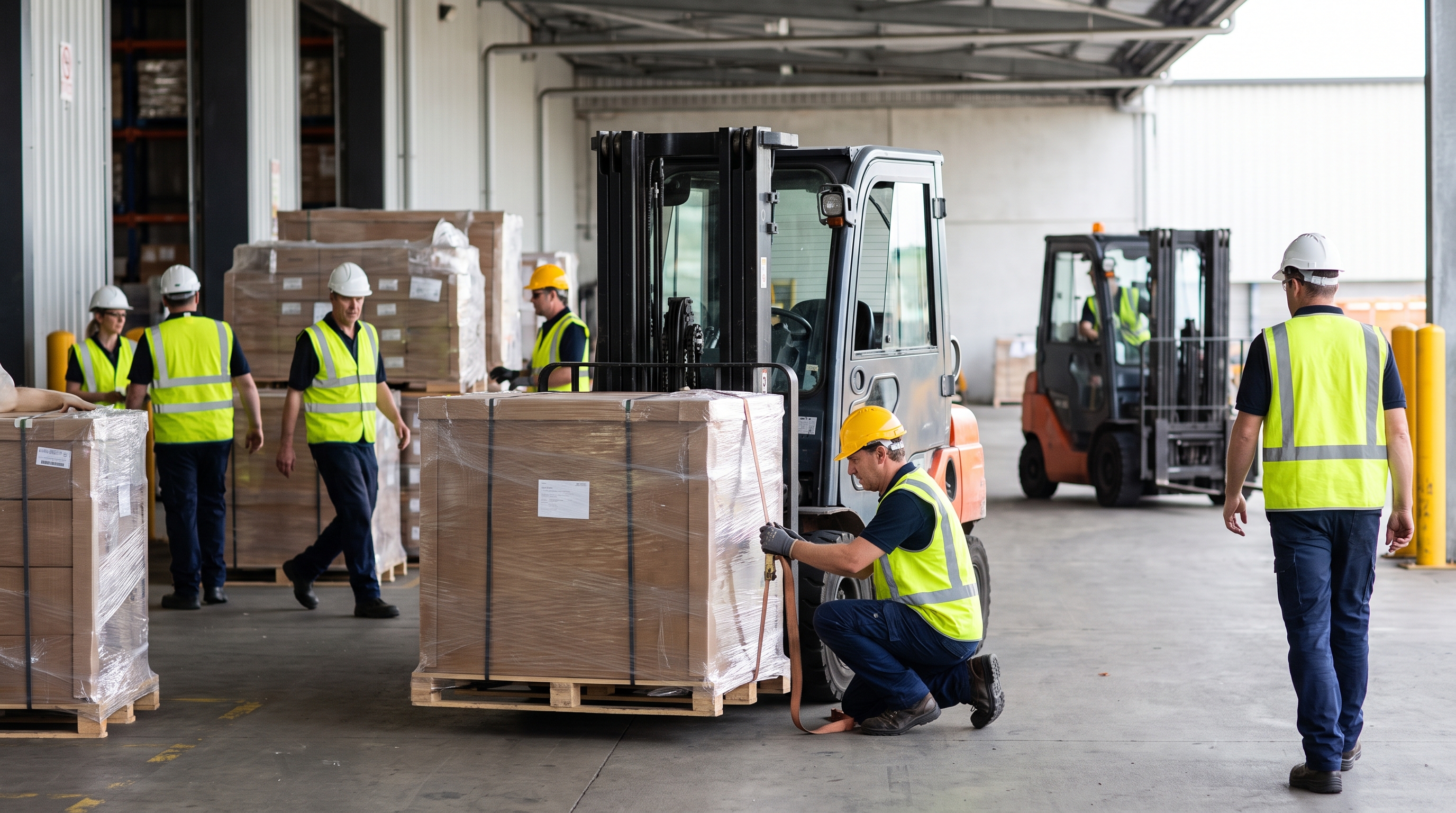
A forklift load that is not secured is a moving hazard. Loose cartons slide off the forks, stacked pallets lean and tip, and individual items shift during travel and cornering, dropping onto aisles, dock plates, and the people below. Load securement is not just about strapping; it is a system of correct stacking, correct fork positioning, correct travel technique, and the right physical restraints for loads that need them. This guide covers how to secure a load on a forklift from the moment it is picked up to the moment it is set down.
Start with a stable stack
Load securement begins before the truck moves, with the stack itself. The load must be stacked so it is stable: heavier items at the bottom, lighter items on top, and cartons aligned within the footprint of the pallet. An unstable stack cannot be fixed by strapping alone, because the strap holds the stack together but does not fix a lopsided distribution of weight. The operator should inspect the load before picking it up, re-stack anything that is leaning or overhanging the pallet, and refuse a load that cannot be made stable. An overhanging or unstable load is the start of most load-drop incidents.
The load must also sit correctly relative to the forks. The forks should be fully engaged under the load, spaced to spread the weight, and positioned so the load’s center of gravity sits between the forks and back against the carriage. A load that is only halfway on the forks, or that hangs past the fork tips, shifts the center of gravity forward and changes the truck’s stability. The forklift safety 101 guide covers the load center concept that underlies this positioning.
When a load needs strapping
Some loads are inherently loose and need physical restraint: stacks of individual cartons, bundles of pipe or lumber, drums, bags, and any load made of multiple separate pieces. For these, straps, bands, or load wraps secure the pieces to each other and to the pallet. The restraint should be tensioned so the load cannot shift during travel, but not so tight that it damages the product or the packaging. Straps should be inspected for cuts, fraying, and broken hardware before use, because a strap that fails mid-travel is worse than no strap at all. Shrink wrap is often used to hold a stacked pallet together, and it works, provided the stack is stable to begin with and the wrap covers enough of the load.
The facility should have a standard for what gets strapped and how. If the operation moves drums, coils, or irregular items, the standard should specify the restraint type, the number of straps, and the anchor points for that load type. Operators should be trained on the facility’s specific securement requirements, and the requirements should be enforced consistently, because a load that was fine without a strap last week is not evidence that it is fine without one today.
Pick it up correctly
The pickup determines whether the load stays on the forks. Approach the load square, with the forks level and at the right height, then drive forward until the forks are fully under the load, tilt the mast back slightly to seat the load against the carriage, and lift. Never pick up a load with the forks angled or at the wrong height, because that starts the load sliding before travel begins. After lifting, check that the load is stable and centered before moving. If the load shifts when it is lifted, set it back down and fix the problem rather than traveling with a load that is already moving.
For loads that are taller than the mast, the operator should be aware of the load’s height and the clearance above, including doorways, rack beams, and sprinkler systems. A tall, loosely stacked load can catch an overhead obstruction and dump forward. The operator should also keep the load tilted back and carried low during travel, typically with the forks just a few inches off the ground, which is the safest position for stability and the position from which a load is least likely to fall.
Travel technique matters
Most load drops happen during travel, and most travel drops come from speed and cornering. A load that is stable at a slow, straight travel will slide or tip when the truck corners hard or stops abruptly. The operator should travel at a speed that lets them stop and turn smoothly, slow down well before corners, and never corner with a raised or tilted-forward load. On a slope or ramp, travel with the load on the upgrade, and keep the load low. The stability rules that govern these decisions are explained in the forklift tipping guide, because an unrestrained shift in the load is a direct cause of tipovers.
The operator should also anticipate the conditions ahead. Wet floors, dock plates, thresholds, and uneven surfaces can jolt the load, and the operator should cross them slowly and squarely. A load that was secure on smooth concrete can shift when the truck crosses a dock plate at speed, so the operator treats every change in surface as a reason to slow down.
Setting the load down
The set-down is where securement failures show up. Lower the load slowly and squarely onto the dock, rack, or storage position, tilt the mast forward to release the load only after it is resting on the surface, and back out without dragging the forks or nudging the load. Never drop a load from height, because the impact can damage the product and destabilize the load for the next operator. After setting down, the operator should verify the load is resting on its supports and not overhanging into an aisle or pedestrian walkway. A load left sticking out of a rack is a hazard to every truck and person that passes.
Building securement into the routine
Load securement should be part of the operator’s daily routine and the facility’s standard practice. The pre-shift inspection, the load assessment before pickup, the strapping standard, and the travel technique all belong in the operator training, and the rules in the forklift safety tips post reinforce them. When a load drop or a near miss happens, it should be reported and investigated, because most drops have a preventable cause that a fix will stop from repeating.
Run the Risk Scorer to see how load handling and load drop exposures rank in your operation, review the systems index for monitoring that supports safe load handling, and use the quote form when you are ready to scope vendor input. A secured load is the difference between a routine move and a dropped load, and the operator who stacks, straps, and travels with discipline makes every load a safe one.

