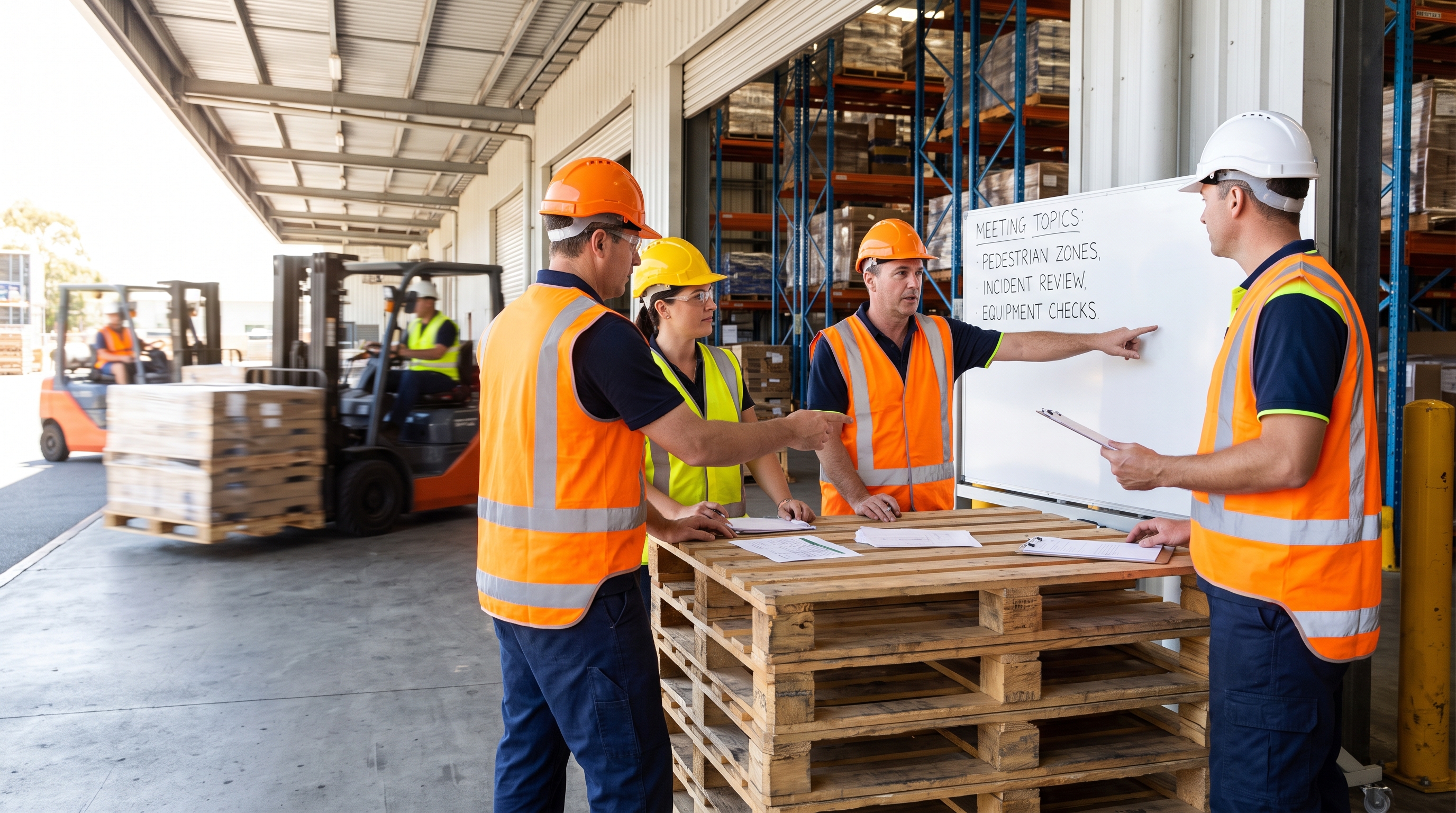
A forklift safety committee is the place where a safety program stops being a set of documents and becomes a set of decisions. OSHA does not require a committee by name, but its recommended safety and health program framework asks employers to involve workers in hazard identification and program review, and a structured committee is the most practical way to do that on a busy floor. This post covers how to build one, who should sit on it, and which meeting topics actually change behavior.
Why a committee is worth the meeting time
Most forklift incidents share a pattern: the hazard existed before the injury, and several people on the floor knew about it. A committee exists to shorten the distance between what workers know and what management acts on. BLS data consistently shows powered industrial trucks as one of the leading sources of fatal work injuries each year, which means the stakes of leaving hazards unaddressed are high.
A well-run committee also creates shared accountability. When operators, maintenance staff, supervisors, and management sit in the same room and review the same incident data, it becomes harder to blame any single group. The committee turns safety from a top-down rule into a floor-level conversation, which is the core idea behind a strong forklift safety culture.
Committee structure and membership
Keep the committee small enough to act and broad enough to represent the floor. A practical size is six to ten members. Suggested composition:
- Operators: at least two, ideally from different shifts. They see the daily reality of unsafe acts and near misses.
- Maintenance or equipment staff: someone who can speak to inspection findings and repair backlogs, aligned with the preventive maintenance checklist.
- Supervision: a shift lead or warehouse manager who can commit resources in the room.
- Safety or HR representative: someone who tracks incident management, training records, and corrective actions.
- Management sponsor: a decision-maker who can approve budgets and policy changes, otherwise the committee makes recommendations that stall.
Define a chair and a recorder, and set a one-year term with staggered rotation so the committee does not go stale. New members should be trained on how the committee works before their first meeting, not left to learn on the job.
Charter, scope, and meeting cadence
Write a short charter that states the committee’s purpose, authority, and limits. It should cover what the committee can decide (for example, changing a traffic pattern, approving a new pedestrian warning system) and what it can only recommend (for example, major capital purchases). A clear charter prevents the two failure modes of committees: deciding nothing or overstepping into management’s role.
Meeting cadence matters more than meeting length. Monthly is the standard for most facilities, with quarterly deeper reviews of safety KPIs and annual reviews of the whole forklift safety program. Keep meetings to 45 to 60 minutes, publish an agenda in advance, and always end with assigned actions, owners, and due dates. A committee that meets without actions is a committee that is just a meeting.
High-value meeting topics
Rotate through a mix of reactive and proactive topics so meetings stay grounded. Reliable high-value topics include:
- Incident and near-miss review: walk through recent near-miss reports and determine what to fix, not who to blame.
- Hazard walk results: have members split the facility into zones and report back on unsafe conditions.
- Training currency: review which operators are due for refresher training or certification updates per OSHA 29 CFR 1910.178(l).
- Equipment issues: review inspection completion rates and maintenance backlogs against the maintenance software reports.
- Rule changes and their results: when a policy changes, the committee should own reviewing whether it worked, using leading and lagging indicators.
Avoid turning meetings into lecture sessions. Use five minutes of the meeting for members to share one observation from the floor, then spend the rest on decisions.
Turning discussion into action with data
A committee is only as good as the data it reviews. Bring current numbers to every meeting: incident counts, near-miss counts, inspection completion rates, training due dates, and exposure scores. The Risk Scorer is a practical way to quantify pedestrian and vehicle exposure by zone, so the committee can prioritize where changes will have the most effect instead of arguing about anecdote.
Each quarter, review whether past committee actions produced measurable change. If a zone got a new walkway or a speed control, compare incident and near-miss data before and after. That review loop is what separates a committee that meets from a committee that improves. Closing the loop also builds the trust that keeps workers reporting, which is the foundation of behavior-based safety.
Building the committee into the program
Start small: pick a chair, recruit five or six members from different shifts, and hold the first meeting with a single agenda item and one assigned action. Then let the structure grow from what works. The committee should be written into your facility’s broader forklift safety systems guide, with its charter, membership list, and meeting calendar kept with the rest of the program documentation.
If you are standing up a committee or reviewing one that has gone stale, run a quick risk assessment first so the first few meetings focus on real exposure data. A committee that starts with a clear picture of where the risk actually sits, and a management sponsor who commits to acting on its recommendations, is the committee that survives its first year and keeps improving its safety program.

