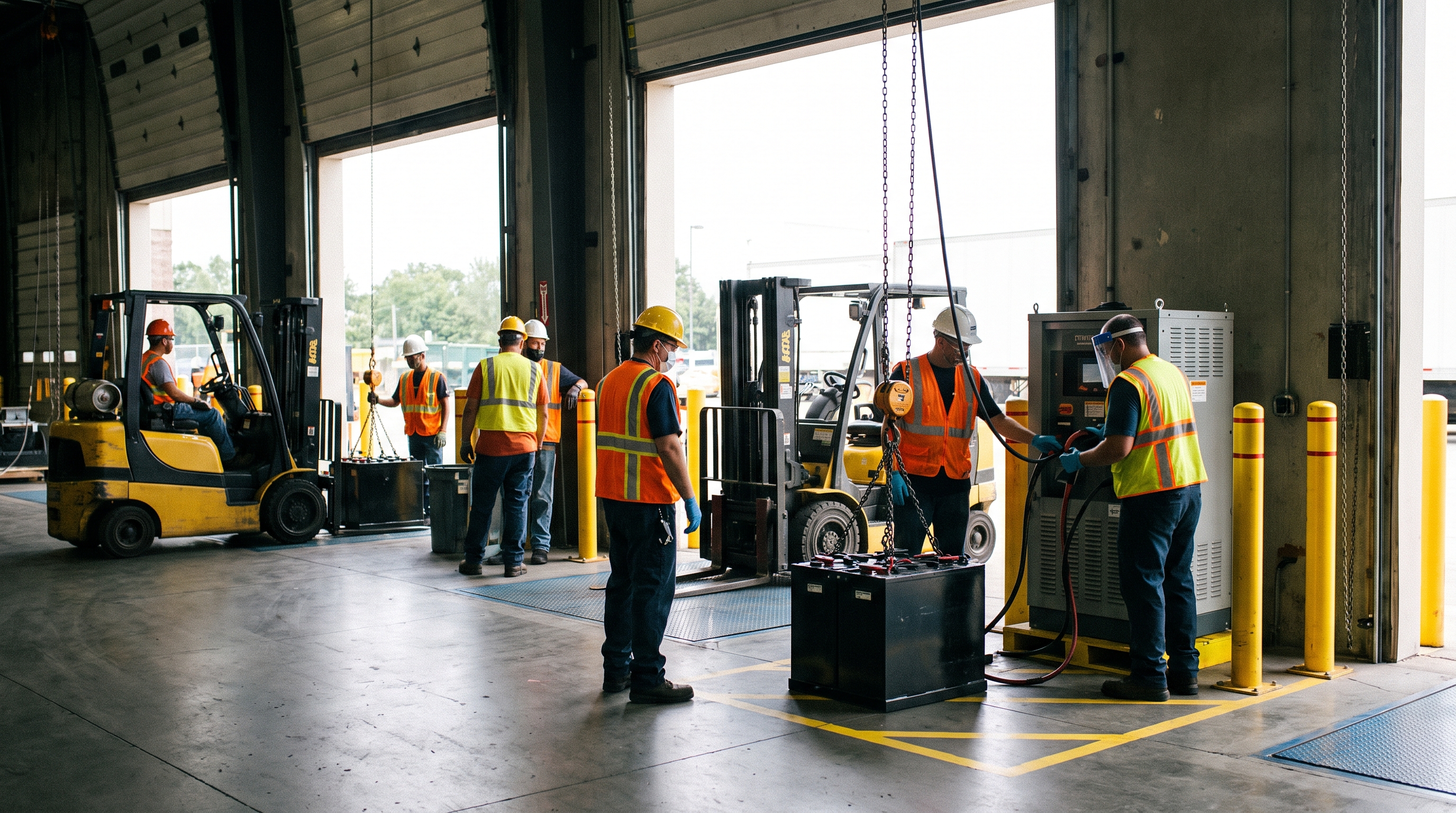
Electric forklifts run on large batteries, and a battery is the most hazardous component on the truck when it is handled carelessly. Lead-acid batteries hold sulfuric acid and emit hydrogen gas while charging; lithium batteries store enough energy to release a great deal of heat very quickly if damaged or overcharged. The workers who charge, swap, water, and maintain these batteries face burns, eye injuries, electric shock, and fire risk, and many of those injuries are entirely preventable. This guide covers the hazards, the safe procedures, and the maintenance habits that keep a battery program safe.
The main battery hazards
Three hazards define forklift battery safety. First is hydrogen gas. When a lead-acid battery charges, it produces hydrogen, which can build up to an explosive concentration in an enclosed, poorly ventilated space. This is why charging areas must be ventilated and why smoking, open flames, and spark-producing tools are prohibited near a charging battery. Second is sulfuric acid electrolyte, which damages skin and eyes on contact and requires the operator to wear acid-resistant gloves, an apron, and eye protection whenever handling a battery or connecting a charger. Third is electrical current. A forklift battery can deliver hundreds of amps into a short circuit, enough to weld tools, melt jewelry, and start fires, so conductive items and loose metal tools have no place at a charging station.
Safe charging practices
OSHA’s powered industrial truck standard at 29 CFR 1910.178(g) sets the charging baseline. Charging must happen in an area designated for that purpose, with ventilation adequate to disperse hydrogen, smoking and open flames prohibited, and the truck’s battery compartment kept clean. NFPA 505 adds the fire-safety requirements, including the construction and clearance expectations around charging stations. In practice, a safe charging area has a hard floor, good airflow, a fire extinguisher, an eyewash station, and clear signage, and it is separated from normal forklift traffic so pedestrians and other trucks do not pass through the charging zone.
The charging routine itself is simple and unforgiving. Connect the charger with the power off, using the correct connector for the battery. Never force a mismatched plug. Do not rest tools or conductive materials on the battery while it is connected. For lead-acid batteries, keep the caps in place and check the electrolyte level before charging, adding water only if needed and only to the correct level. Charge in a single session rather than repeatedly topping off, because frequent partial charges can sulfate lead-acid plates over time.
Battery handling and changing
In operations that run multi-shift schedules, batteries are changed out mid-shift, and the change-out is one of the most hazardous moments in a battery’s life. A battery weighing hundreds of pounds is lifted with a battery roller stand, crane, or powered changer, and any mistake can crush a hand or drop the battery. Only trained workers should perform change-outs, the area should be clear of bystanders, and the battery should be moved slowly and deliberately. During a change-out, the same rules apply as during charging: no open flames, no conductive jewelry, and protective equipment worn throughout. The lift truck should be shut down with the parking brake set before the battery is disconnected.
Lithium-ion considerations
Lithium-ion batteries are increasingly common in forklifts, and their hazard profile differs from lead-acid. There is no liquid acid and no gassing during normal charging, which simplifies ventilation and electrolyte handling. But lithium batteries store energy densely, and a damaged cell, a manufacturing defect, or an improper charger can lead to thermal runaway, a self-sustaining heating event that produces smoke, fire, and toxic gas. Management of lithium batteries centers on using the correct charger and charge profile, protecting the pack from physical damage and punctures, monitoring temperature during charging, and following the manufacturer’s guidance on storage, replacement, and fire response. Water is not the default extinguishing method for a lithium fire, so facilities with lithium fleets need the response plan in place before an event, not after.
Maintenance and inspection routines
Battery problems announce themselves gradually, and the routine checks catch them early. Inspect the battery case for cracks and bulging, the cables for chafing and corrosion, the terminals for damage, and the electrolyte level for lead-acid units. Check the charger cable and connector before each connection. Record charge cycles and note batteries that finish abnormally fast or run hot. A battery that loses capacity early, or a charger that trips repeatedly, is a signal for a professional inspection rather than another month of use. The inspection and logging belong in the preventive maintenance checklist, and tying the data into maintenance software turns scattered paper logs into a fleet-level view of battery health, which catches failing units before they fail in service.
Training and the bigger picture
Every worker who charges, changes, or waters a battery needs documented training on the specific battery type in use, because lead-acid and lithium procedures are not interchangeable. That training should cover the hazards, the personal protective equipment, the emergency response, and the exact steps for that facility’s chargers and change-out equipment. Electric trucks bring a different overall hazard profile than internal combustion units, quieter and cleaner but carrying their own risks, as the electric forklift post on this site explains in more detail. Run the Risk Scorer to see how battery-area hazards rank in your operation, review the systems index for monitoring that can flag charging and battery anomalies, and use the quote form when you are ready to scope vendor input. A battery program built on ventilation, correct procedures, protective equipment, and routine inspection is one where the batteries quietly do their job and the safety team never hears about them.

